Landing Page vs Homepage: How to Spot Their Differences & Why It Matters
The internet is a sea of information neatly organized into individual pages on unique domains. For just about anything you are looking for, there’s a web page with the answer.
For shoppers, that answer is product-based.
Ecommerce marketers know that it matters what page a shopper ends up on depending on where they are at in the customer journey.
In the case of landing pages and homepages, the difference is vast and important.
Just as product pages and FAQ pages have different purposes, the same is true for your homepage and any one of your website landing pages.
Understanding the difference unlocks your ability to make your store work harder for you.
In this post, we’ll cover:
#cta-visual-pb#<cta-title>Build landing pages that convert<cta-title>Create and customize landing pages with all the vital elements for conversions—or build a fabulous homepage quickly.Start designing for free
What’s the difference between your landing page and homepage?
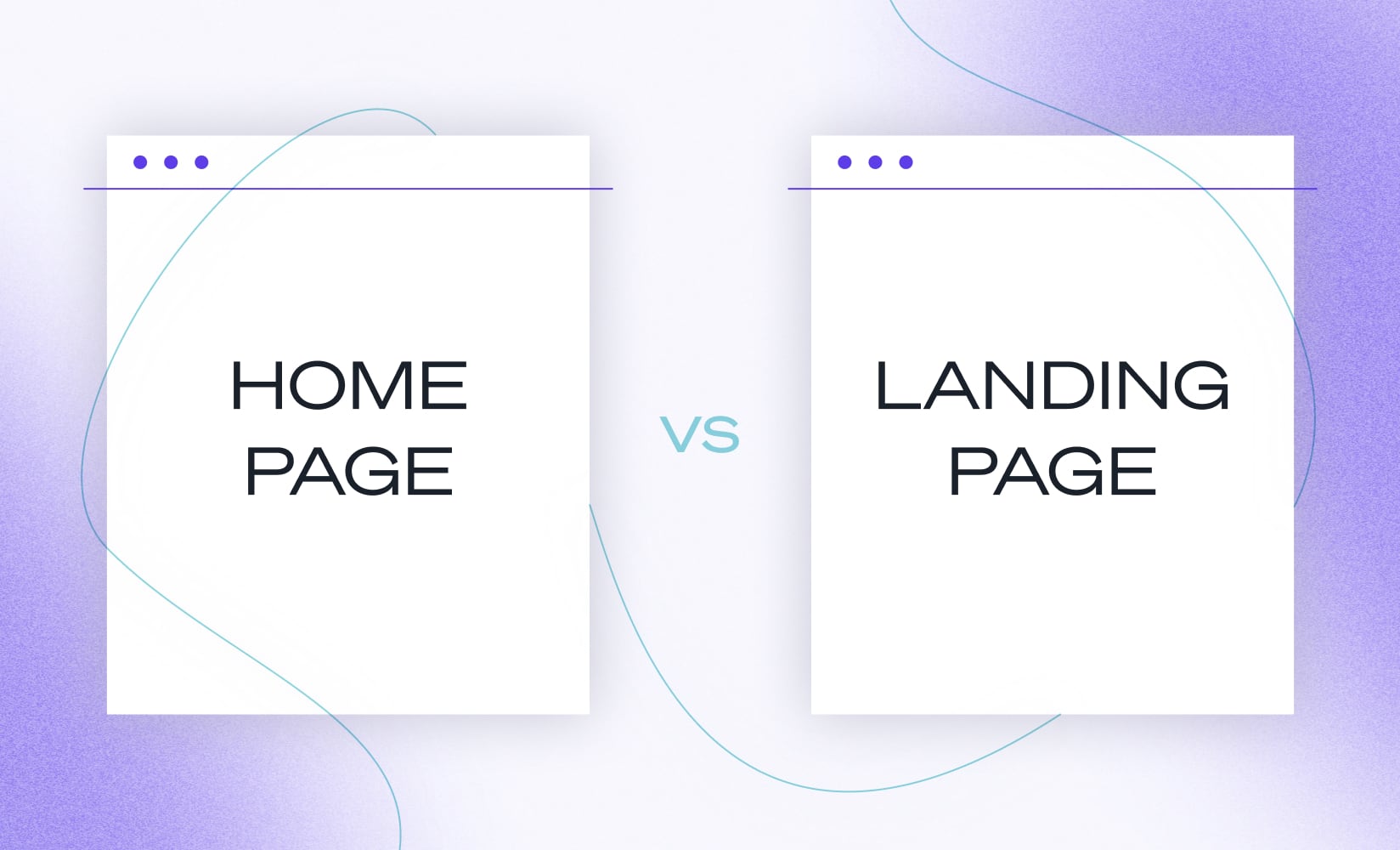
We’ll get into the details of how these two important pages differ from each other, both in purpose and anatomy, but let’s define each in a single sentence:
- A landing page is a standalone web page created to drive a specific audience to take a specific action.
- A homepage is the hub for a brand’s website, introducing who they are and what they sell with a plethora of calls to action.
Understanding these pages at their most basic level is vital for digging deeper into their differences.
Asking about the difference between landing pages and homepages is quite similar to asking what the difference is between landing pages and a website. Your homepage is your website, and your landing pages are conversion tools.
As with every web page, purpose is at the heart of how they are built.
OLIPOP example: Homepage vs landing page
Before we dive into the purpose of these two pages, let’s just take a look at an example from OLIPOP.
The healthy alternative to soda, their homepage introduces many things at once—their partnership with the new Minions movie, their unique selling propositions, their numerous flavor varieties, their sampler bundle, their subscription product, and their blog.
The navigation bar is simple but clear, delivering the curious exactly where they need to be.
Their landing page is much simpler. It starts with a powerful headline (”Ditch the Zero”) in the header, which switches to a hero image of their soda in front of its out-of-focus competitors (the zero sugar offerings from Coke and Pepsi).
It follows with “Switch to OLIPOP” and goes into a comparison of their product and those from the other brands.
The point of this page is to move regular soda drinkers to make the switch to their healthy alternative. While they kept the navigation bar for this landing page, it isn’t distracting from the purpose of explaining themselves to a particular audience.
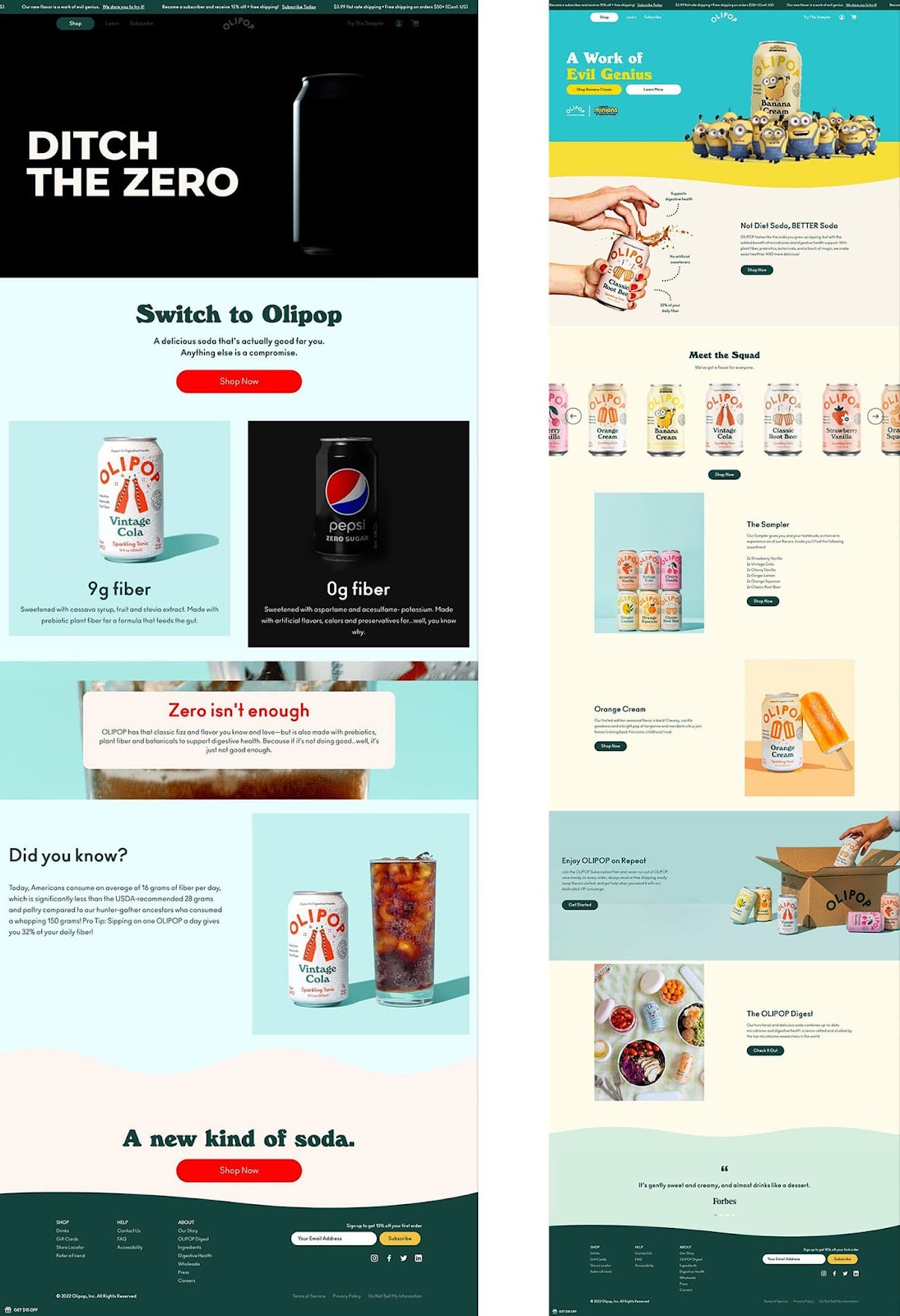
The style of these pages is consistent, but the landing page doesn’t let up from its central goal of converting the visitors they drove there.
Purpose: Landing page vs homepage
While there are many differences between a homepage and a landing page, it all comes down to the purpose of each type of page.
Ecommerce brands spend a great deal of time trying to understand their customers and adapting their marketing strategies to create better outcomes for their bottom line.
A page’s purpose comes down to the type of potential customers it wants to reach and where they are in their sales journey.
Let’s look at the purpose of each page to see this in action.
The purpose of a homepage
Your homepage is a firehose—a flood of information about you and what you sell presented in a visually appealing way.
Its purpose is to introduce shoppers to your brand, your values, your collections, and your products. The brand can show visitors what they have to offer and build trust in their mission.
The calls to action are numerous, and no individual call to action is emphasized over the rest.
At this point, visitors are indistinguishable from each other. Traffic to the homepage comes from organic search, referrals, and brand awareness ads.
This is the point from which a brand can begin to understand shopper behavior, funneling them into the right pages that can serve up more targeted messaging.
“The goal of a homepage is to get the visitor to be intrigued enough to explore a collection page, specific product, or to learn more about the brand. This is the beginning of their customer journey and the most important thing is that the visitor needs to feel like they’ve made it to the right place.”
— Noah Kain, Owner at Noah Kain Consulting
So, you have website navigation at the top and bottom of the page, with the top nav often including a mega menu full of the various products and product collections, as well as brand information.
The purpose of a landing page
Your landing pages are precision tools. So, what is the main purpose of a landing page?
A landing page is created to get visitors to take a particular action—such as to purchase a subscription product or download an ebook.
Unlike your homepage, a landing page is intended for only a small subset of your audience and thus can use targeted language to drive up conversion rates.
So, to successfully convert lots of shoppers, you will want to create several unique landing pages that go after shoppers with different profiles. Each landing page will have targeted messaging that works to convince visitors to click the CTA.
Landing pages focus on a targeted message because they can control who sees the page.
Unlike regular store pages, landing pages aren’t usually navigable from the main website. Traffic to landing pages comes from paid ad and email marketing campaigns, channels where the audience can be controlled.
When creating your first landing pages, it’s best to have a checklist of best practices to ensure it performs at its very best.
After building a number of landing pages and A/B testing them to see what works best, you’ll be able to replicate your success time after time.
While there are many types of landing pages, their structure doesn’t need to vary too much.
For instance, we put together some of the best landing pages for promoting special offers (which you can download for free!), and we found that they all include many of the same elements.
When should I use a landing page vs a homepage?
“When creating a targeted campaign to increase sales or conversions, an ecommerce landing page is your best bet. However, your website’s homepage is the way to go if you want to give visitors information about what you offer and why they should buy from you.”
— Ben Rollins, Co-Founder of Axon Optics
#cta-visual-pb-ee#<cta-title>Not Your Average Shopify Store: 25 Gorgeous Custom Landing Pages<cta-title>See how custom pages make these 25 beautiful Shopify stores drive conversions and get inspired to elevate your store’s customer experience.Grab your free copy
Structure: Landing page vs homepage
Landing pages and homepages may have some structural similarities, but you’ll notice some major discrepancies between the two as you look deeper.
These differences come directly from how they differ in purpose. Let’s take a look at each.
“Landing pages are typically shorter and more focused than homepages—meant to capture the attention of the customer and persuade them to take action. Homepages are usually longer and include a variety of links and information. While landing pages focus on conversion, homepages focus on navigation”
— Jamie Irwin, Director & Founder at Straight Up Search
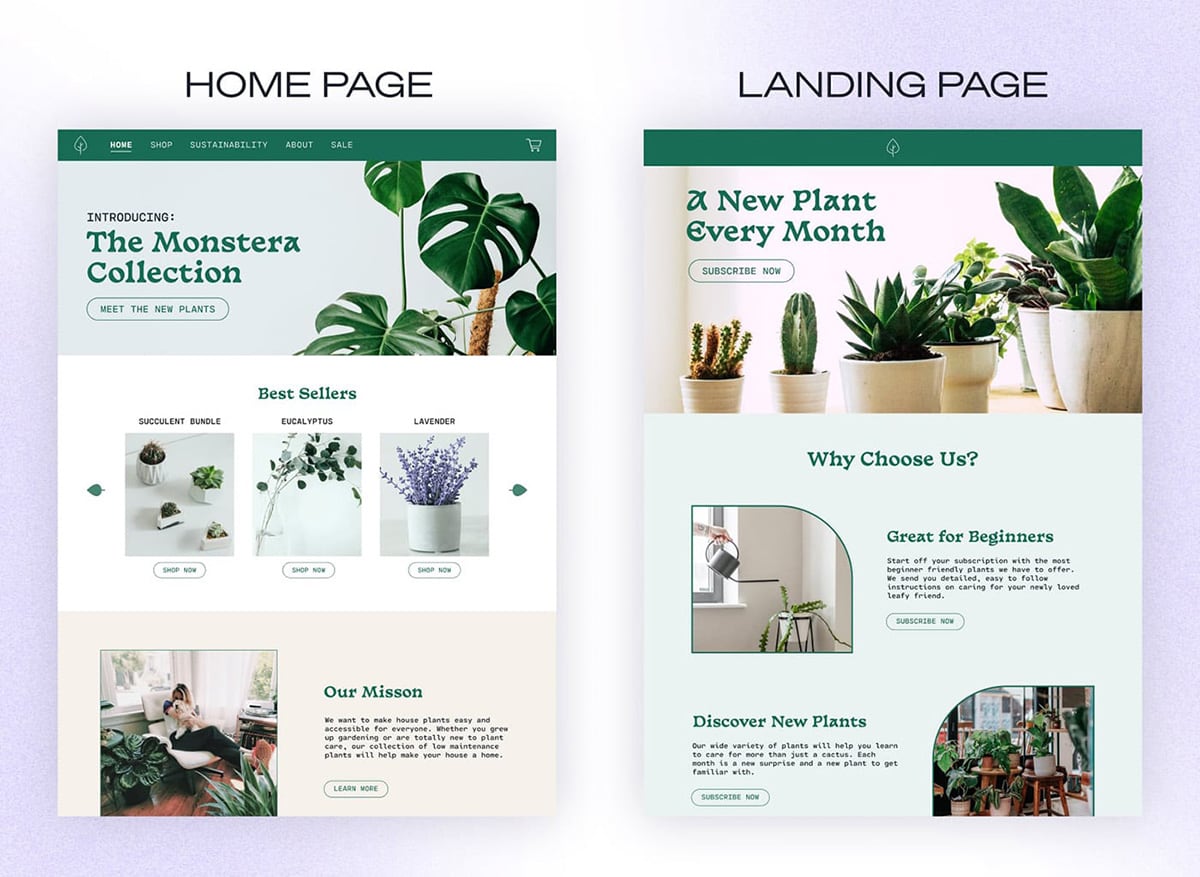
Anatomy of a homepage
In general, your homepage should reflect your brand, unique and memorable.
Your homepage doesn’t need to fit into a templated box but should check off certain boxes to successfully market your products and your brand values.
So, what does a homepage look like?
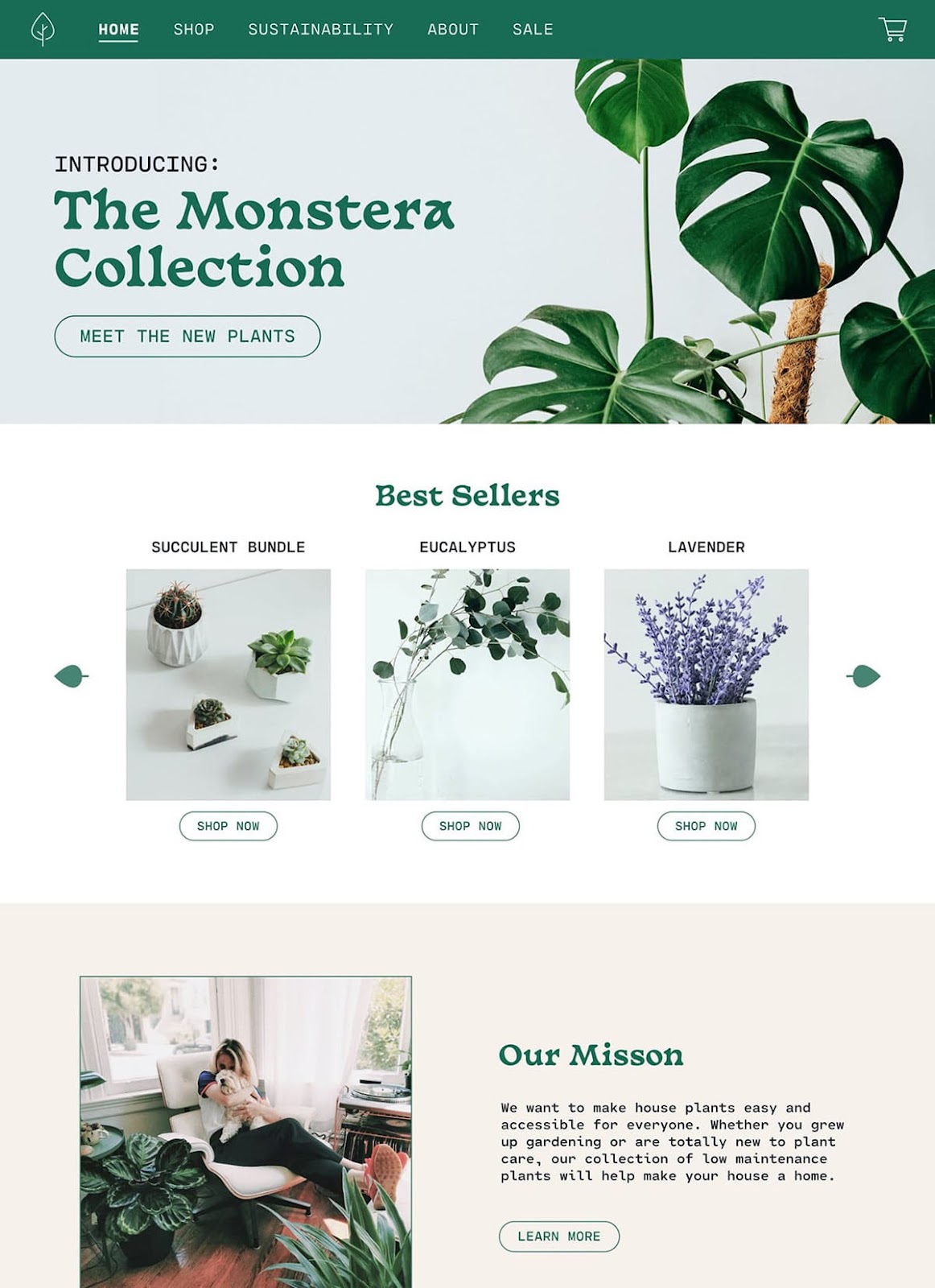
Some key elements of a homepage are:
- Stellar navigation. There should be zero friction for shoppers to get where they want to go. Use awesome product collections to push them toward their perfect product right from the navigation menu at the top of the page.
- Attention-grabbing above-the-fold content. First impressions matter, so make the first things they see compelling enough to get them scrolling.
- Powerful product photography. Your products are only as good as their visual representation when you sell online, so go all in on stunning product photography to get shoppers excited. Make the rest of the page so visually appealing that they’ll want to click.
- Captivating CTAs. None of that ‘Click Here’ nonsense. Make your calls to action actually encourage shoppers to take that action. Active verbs work well here.
- Deep focus on the product. While homepages don’t emphasize individual CTAs over all the others, emphasizing products over brand details is a strategic move. After all, that’s why shoppers are there. Make your homepage product-focused, and they’ll start clicking.
- Brand education. This is your chance to tell the world about your brand and what you stand for. Link to your About Us page, your mission statement, and your social media handles to ensure they don’t forget your brand.
The most important thing is that your visitors can quickly find what they need, whether via detailed navigation with lots of unique collections or via site search functionality that gets them right to what they want.
“It is highly recommended to add a search bar to your site. This makes it easier for people to find exactly what they’re looking for if they have a distinct target in mind.”
— Ian Kelly, CEO at NuLeaf Naturals
By showing clearly why your brand is worth more investigation right above the fold, you can keep bounce rates low and continue to nurture new visitors toward your products (and hopefully your email list).
Figure out what you want your shoppers to know about you and build your homepage accordingly.
Anatomy of a landing page
A landing page, as we’ve talked about, is more targeted than a homepage. This makes them shorter and simpler in contrast.
So, what does a landing page look like?
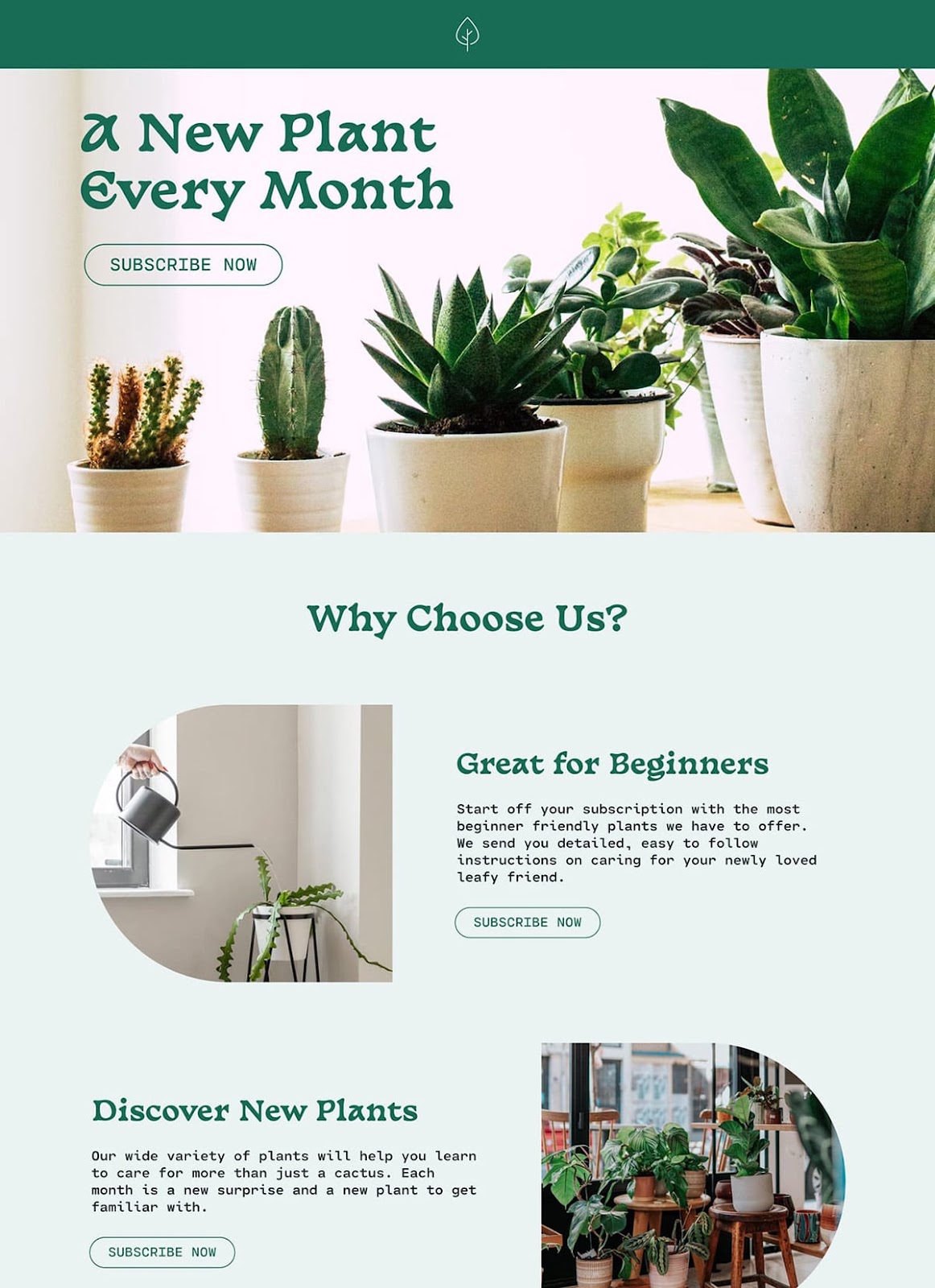
While landing pages can include the top navigation, many don’t. Why give visitors alternate exits when your goal is to drive them toward a specific goal?
“An effective landing page has a clear, single call to action. Don’t leave the user confused about what the next step is. For ecommerce, this is likely to purchase a product. Make it as easy as possible, with clear information on payment options and deliver—ideally all above the fold, to keep scrolling to a minimum.”
— Emma Williams, Digital Marketing Manager at Edge of the Web
Having only one action for visitors to take helps to keep your messaging focused. If you mix offers on your landing page, it would only serve to diffuse the message you want to get across.
Knowing exactly who you are trying to persuade makes creating a landing page quite simple. Instead of trying to please all the people all the time, you merely have to please some of the people some of the time.
What are the key components of a landing page?
- Lack of navigation. The top navigation bar is often left off to reduce distraction, giving visitors the option of taking action or exiting the page entirely. This makes conversion tracking extremely clear-cut compared with other pages.
- Singular call to action (CTA). With one goal, all CTAs on the page go to the same place. You can have as many CTA buttons as you want, but they lead to a single page or form.
- Standalone from the main website. Since you want to control the audience that gets to a landing page, they are not navigable from the main site. Instead, they are linked from paid ad and email campaigns.
- Compelling above-the-fold content. Homepages and landing pages have in common the need to impress above the fold. The headline needs to be exciting, hitting upon a pain point that your product solves.
- Stellar visuals. Another similarity is the importance of visuals—both the stunning product photography and the counterbalancing white space that makes a page exciting to scroll.
- Features and benefits. You got them to scroll, so now tell them why your product is so great in easy-to-read benefits-focused features, often accompanied by clear icons.
When you’ve built a really effective ecommerce landing page, you’ll be rewarded with a bevy of new purchases and customer email addresses. Then comes the work of retaining those new recruits!
Since it’s often easier to understand what works by example, we’ve compiled a ton of them.
You can check out our roundup of the best ecommerce landing pages in general or a few of the top mobile-focused landing pages that we love.
Convert better with purpose-built homepages and landing pages
So, we’ve established how these two vital page types differ and why you need each of them for the success of your online store.
When you understand the purpose of your store pages, you can better optimize them to create a cohesive shopping experience for your customers and to drive up your revenue.
Whether it’s your firehose of a homepage or your scalpel of a landing page, how you build these pages makes all the difference in the world to how your brand succeeds online.
By building better pages that know their purpose, you see better results.
#cta-visual-pb#<cta-title>Create an incredible homepage in minutes<cta-title>Create and customize an amazing page to introduce your brand and products, then set it as your homepage.Start designing for free today

Sean Flannigan
Sean is one of Shogun's tireless content marketers. When he isn't creating exciting ecommerce content, he's probably biking or at the park.