
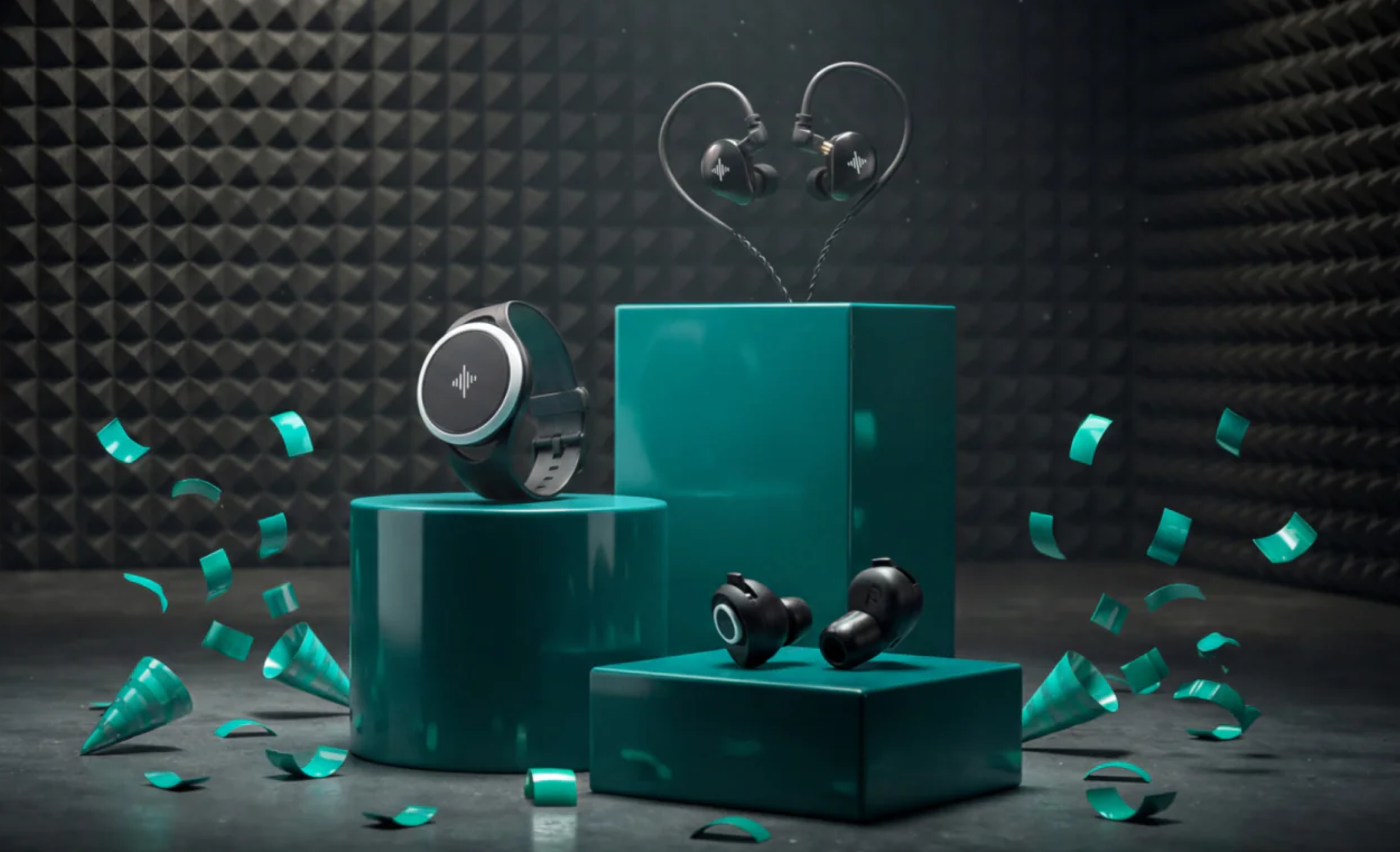
Founded with a mission to help musicians practice better and perform with more confidence, Soundbrenner builds technology that solves the everyday problems standing between players and the music they want to make. The brand made its name with wearable rhythm tools, the Soundbrenner Pulse and Core, before expanding into a broader ecosystem of musician-focused hardware, including its Wave and Wave Pro in-ear monitors.
Today, those IEMs are central to the business. Designed for musicians who practice, perform, record, or play in loud environments, the Wave line has also attracted a wider audience: gamers, content creators, audio enthusiasts, and anyone who values wired listening for its sound quality, low latency, and freedom from batteries and Bluetooth.
That product breadth is part of what makes Soundbrenner's ecommerce challenge interesting. These aren't impulse purchases. Each product requires real explanation: customers need to understand what it does, why it matters for their specific situation, and which bundles or accessories make sense for them. Getting that story right on the product page is everything.
Before adopting Shogun A/B Testing, Soundbrenner's team was making regular improvements to product pages, adjusting headlines, restructuring layouts, refining offers, but without a clean way to know whether those changes were actually helping customers make a decision.
"Our biggest challenge was making confident decisions on product pages without over-relying on internal opinions," - Florian Simmendinger, Founder, CEO & Head of Design, Soundbrenner
The problem wasn't a lack of ideas. It was a lack of signal. Pages were updated because they looked better, because a stakeholder preferred a certain direction, or because a new campaign called for a refresh. But the learning was slow and informal. There was no reliable way to compare the old version to the new one and ask: did this actually improve things?
"A page might be changed because it looked better, or because it matched a campaign, but we did not always have a clean way to compare the old and new versions.”
“That made it harder to know which changes were actually helping customers make a decision."
For a brand where the product page carries a lot of educational weight, that uncertainty carried real cost.
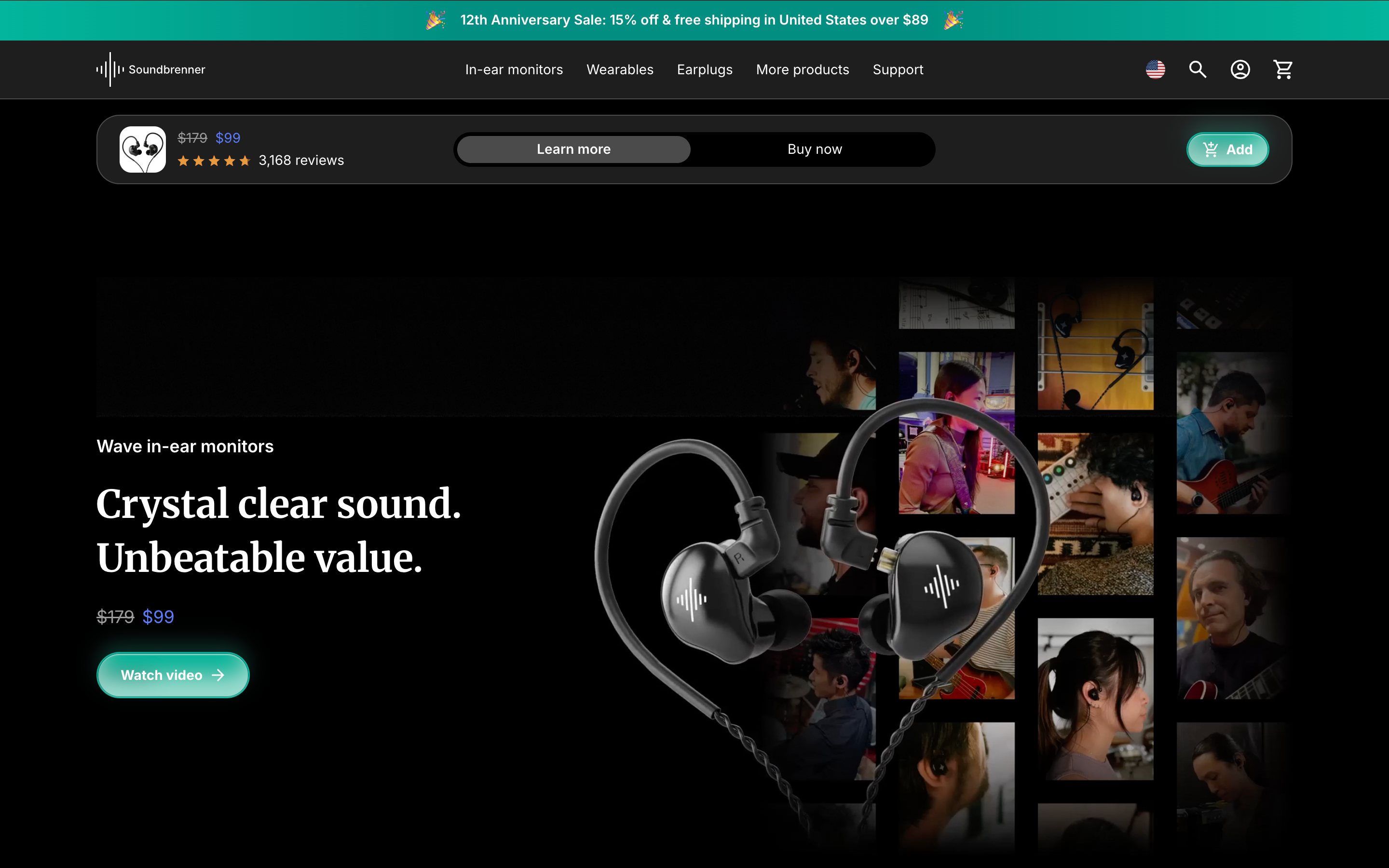
When evaluating experimentation platforms, Soundbrenner had a clear set of priorities: ease of use, deep Shopify compatibility, fast time-to-launch, clean reporting, and a workflow that a lean ecommerce team could actually own.
Shogun checked every box, and what stood out most was how naturally it fit into the existing Shopify environment.
"I really like that Shogun works with the native Shopify UI instead of pulling you into a completely separate website or platform," Florian explains. "The value is that you can test inside the same environment where you already create and manage landing pages and product experiences."
That distinction mattered. Other tools felt disconnected from the pages customers actually see. Shogun felt like part of the workflow, intuitive enough that a marketer or ecommerce lead could define a hypothesis, build the variant, and monitor results without waiting on an engineering cycle.
"The UX is really well thought through," he adds. "It is intuitive, clear, and does not force you to constantly Google how to do something. It just works, which is usually the sign of a great product."
Onboarding was lightweight too. Because the store was already built on Shopify and Shogun, implementation didn't require a heavy technical lift. The real work was internal: choosing the right tests, defining meaningful success metrics, and committing to looking at revenue per visitor and conversion quality rather than vanity numbers.
Product page tests have driven the most value: headline and positioning changes, page structure, bundle presentation, add-on placement, audience-specific messaging, and review placement. These are the kinds of changes that move the needle on purchase confidence, and for Soundbrenner, that's where the product page earns its keep.
The team's approach is disciplined. They look for low double-digit swings in revenue per visitor or conversion rate before treating something as a meaningful winner, and they take directional signals seriously even when statistical confidence is still building.
In one bundle test, the original experience came out ahead directionally, with roughly 60% confidence in a negative result at the time of review. Rather than shipping the change anyway, the team held back. It was exactly the kind of decision that separates rigorous testing from confirmation bias.
"We were already looking at revenue per visitor and confidence levels instead of only judging the page by taste," he explains. "That made decisions less political and reduces the risk of over-optimizing around internal opinions."
The test the team is most proud of started with a genuine internal debate.
Soundbrenner had built dedicated positioning for two distinct Wave audiences, musicians and gamers, but was hesitant to surface those paths more prominently on the website. The concern was clutter: would giving customers more options fragment the experience and make the journey feel less focused?
Rather than debating it further, they tested it.
The audience-specific version delivered a huge uplift. Customers responded strongly when they could immediately recognize the product page designed for their situation, with their use case reflected back at them, rather than landing on a single generic experience.
"It showed us that when the structure is clear, giving customers a path that matches their use case can be much more powerful than keeping the page artificially simple.”
The insight reframed how the team thinks about page complexity. What feels like clutter from an internal perspective can read as clarity to the customer, provided it's organized around real use cases rather than added arbitrarily.
"We assumed adding more audience-specific product paths might distract people," he explains. "The test showed the opposite: customers responded strongly when they could immediately recognize the product page that matched their situation."
That finding has opened the door to a broader rethink of segmentation and personalization, moving away from one-size-fits-all pages toward experiences that speak directly to who the customer is and what they need.
Beyond any single result, Shogun A/B Testing has changed how Soundbrenner approaches product page decisions at a fundamental level.
"It has made experimentation a more regular part of how we think about ecommerce," he says. "Instead of treating each product page update as a one-off design decision, we now think in terms of hypotheses: what customer are we speaking to, what concern are we addressing, and what outcome should improve if we are right?"
That shift, from taste-driven updates to evidence-driven iterations, is the real compounding benefit. Each test produces a learning. Each learning sharpens the next hypothesis. Over time, that builds an ecommerce operation that gets smarter with every change it makes.
Looking ahead, Soundbrenner plans to keep pushing on segmentation, particularly for musicians buying IEMs for specific use cases like practice, worship, gaming, live performance, and motorcycling. The team also wants to test deeper into page-level messaging, bundle structures, add-on placement, review sections, comparison content, and localized or international offers.
The goal is a product page that doesn't just describe a product but feels made for the person reading it.
For other Shopify brands considering the same path, Florian's advice is direct: "Start simple, but start. You do not need a giant experimentation department to learn something valuable. The important thing is to build the habit of turning strong opinions into tests, especially on pages where small improvements compound over time."
Soundbrenner's story is a clear example of what rigorous, low-friction experimentation can unlock for a lean ecommerce team.
By adopting Shogun A/B Testing, the team replaced internal debate with customer data, caught changes that looked good but didn't perform, and discovered that audience-specific pages, the ones they almost didn't ship, drove some of their strongest results to date.
"If your Shopify store already has meaningful traffic and you are making regular changes to product pages, Shogun A/B Testing is a practical way to take the guesswork out of those decisions," he says. "It lets a lean ecommerce team move faster while still being honest about what the customer data is actually saying."
For a brand whose products require real explanation and real confidence to buy, that honesty is exactly the edge they needed.
.webp)


.webp)